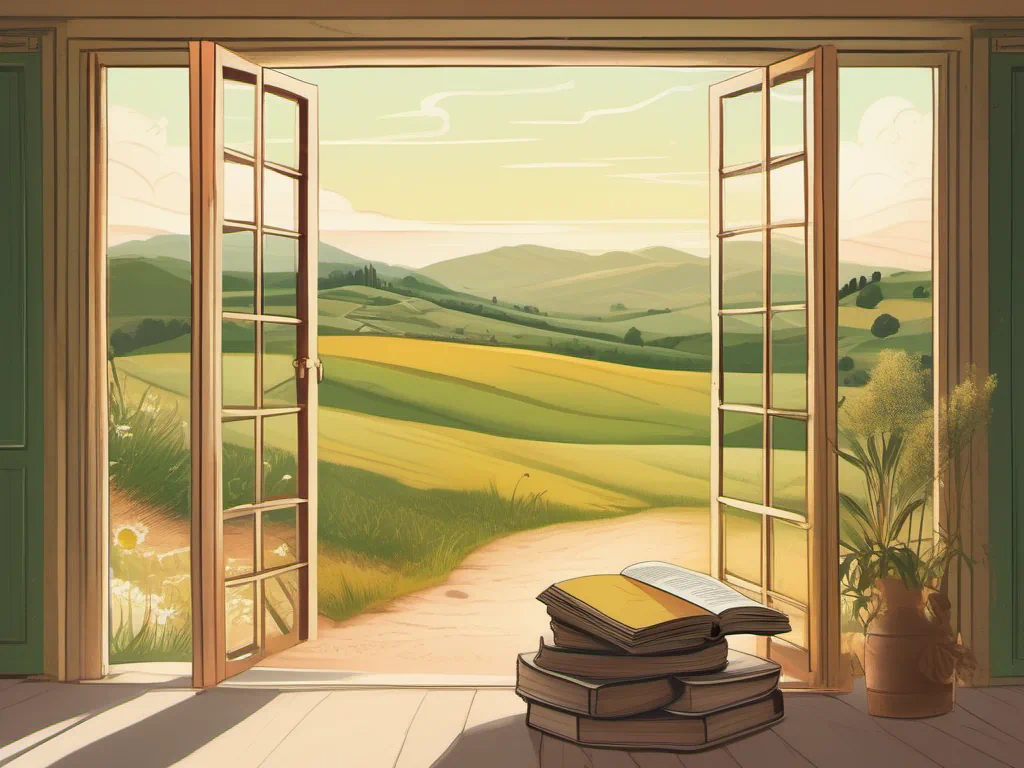
Reviving Praderas (closure) — the blog breathes again
For a long time this site was a beautiful archive and an awkward place to be: hundreds of articles written with care, links that still worked, ideas that deserved to stay alive — and, at the same time, the feeling of walking into a tidy attic where nobody has opened a window in years. The posts were there. The blog itself did not breathe.
This is the story of how we opened that window — not in one dramatic sweep, not with a weekend redesign that fixes everything, but at the pace of someone restoring old furniture: sand, check the hinge, try, sand again.
If you followed Reviving Praderas day by day, you already know the technical chapters. This piece is the closing note in a different register: for people who want to understand what happened, why it mattered, and what you get today when you visit blog.praderas.org.
How it started: an honest diagnosis
Everything began with a simple, slightly uncomfortable question: would I still read this blog if it were not mine?
The answer was mixed. There were gems in the archive — systems tutorials, productivity essays, whole series on decoupled architectures — but the reading experience had stayed stuck in another era. Finding something took too many clicks. Categories did not feel trustworthy. English versions lived a parallel life, not a twin one. And the hero images… well, they were a collage of random pictures with nothing to do with the article underneath.
We did not need to throw anything away. We needed to put the house in order without discarding the furniture.
That is where the first habit appeared — the one that would shape everything else: write the plan outside the code, in documents any person (or agent) could read later — the repository’s .agents folder. Not as prophecy, but as a job site notebook: what is missing, what is done, what we will not reopen without a reason.
The rhythm: small days, not a big bang
If you expected “we hired an agency and in three months we had a new product,” I will disappoint you on purpose. What we did looked more like short chapters:
- One day search stopped feeling broken.
- Another day breadcrumbs and categories started telling the truth about each post.
- Another, the whole site learned to speak two languages without breaking old Spanish URLs.
- Another, each entry could have a cover that means something — not a stock photo with a random seed.
That rhythm has an advantage you only see at the end: you can stop at any point and the site is still better than before. It is not all-or-nothing. It is a meadow cleared stretch by stretch.
The series posts — Day 1 through Day 25 — are the detailed log for anyone who wants the microscope. This closure is the view from the hill.
What you get today as a reader
Imagine you arrive without having lived the process. This is what you should notice — or what we tried to make you notice:
Finding things. Search, pagination, jumping by category or series should no longer be an exercise in patience. The goal is unchanged: within about two clicks you should be reading.
Trusting what you see. Tags use a stable vocabulary. Spanish–English pairs are linked. The date archive exists. Breadcrumbs tell you where you are.
Reading calmly. We tuned typography, tables, and code blocks so a long article — a tutorial, a ship log, a modernization series — does not tire your eyes on a large screen or break on a phone.
Recognizing the blog. Covers stopped being an accident. Every archive post now has its own image: made with care, in the quiet green tone of Praderas, with a sibling file for social sharing that plays nicely with Twitter and Open Graph.
Following series. Reviving Praderas, Decoupled Time Tracking, Tuqan — Modernization, and other collections read like books in chapters, not like a bag of unrelated entries.
None of this is magic. It is accumulated work — much of it documented in public, part of it with AI tools acting as extra labor, not as a ghost author.
How the process evolved (without an instruction manual)
Something that surprised me — and deserves to be told — is how the way of working changed, not only the outcome.
At first the flow was classic: idea, code, commit, sometimes a post explaining the change. Over time a more mature pattern appeared:
- Decide in prose what problem the next slice solves (open vs closed backlog).
- Touch the minimum in templates and plugins — Pico remains a flat-file CMS; we did not build a parallel system for sport.
- Always pair Spanish and English when a translation exists, with the same key and the same cover.
- Run a metadata audit before merge — boring, yes, and therefore effective.
- Write for humans; JSON routes and machine endpoints come after, as a faithful copy of the same story.
AI agents showed up as very fast apprentices that read the site notebook and execute repetitive batches — image retrofits, checks, translations — under explicit rules. They do not replace editorial judgment. They amplify it when the judgment is already written down.
If you ever read a chapter and thought “this sounds like someone who knows what they are doing but is not showing off,” that was the intent.
Two rooms in the same house: machines and people
Near the end of the journey we opened a new door: Man in the loop — a corner of the site for text written by people, without tags or series or the “automatic” blog funnel. The first piece, Skynet did not have it so easy, is deliberately different in tone: more essay, less ship log.
That is not a contradiction. It is the same lesson we explored in that article about AI safeguards: some things should stay in human hands, with their own voice, even when the rest of the building is optimized for indexing, JSON, and agents.
The main blog gained /blog.json, /search.json, and a welcome page for tools at /for-ai-agents. Humans still have HTML, ordinary navigation, and now also a space that does not ask permission from a pipeline.
The mountain of covers (the part that looked trivial)
It may sound shallow: “all that fuss for a header image?”
But a cover is the first sentence you read without words. When for years every entry showed an irrelevant photo, the subliminal message was: this is dead archive. Changing that — first in the series chapters, then in technical series, finally across the whole archive — was an act of respect toward text that already existed.
We generated hundreds of images locally, converted them to a light web format, created siblings for social networks, and left scripts for the next new article. Not because the world needed another ComfyUI workflow, but because discipline matters: one cover per article, the same in both languages, none reused out of laziness.
When we closed that queue, the check tool reported zero entries without an image. It was a quiet, very satisfying day.
What we did not do (and that is fine)
An honest closure includes what is still in the drawer:
- Visual QA on production — walk real URLs on phone and desktop after deploy; the checklist exists, the habit is yours and mine.
- Deep accessibility — focus improvements and hero alt text are in place; a systematic keyboard pass remains.
- Big bets only if we ask for them — separate bilingual taxonomies, highlighted snippets in HTML search… ideas filed, not forgotten.
The open backlog is no longer an infinite construction site. It is maintenance and taste.
What I keep
If I had to sum up the journey in one line for someone nursing their own abandoned blog:
No dramatic resurrections; patient, documented restoration that stays readable for whoever arrives in ten years.
We learned that an old flat-file blog is not ballast — it is a stability contract. That AI helps when the plan is written and a human reviews. That covers matter. That a section where voice is not mediated by the publishing flow is worth having.
Reviving Praderas as a construction series ends here. The blog, however, continues: with a fully illustrated archive, with doors open to new chapters in other series, with a human corner in Man in the loop, and with the window — at last — cracked open.
Thank you for reading to the end. The meadow breathes again.